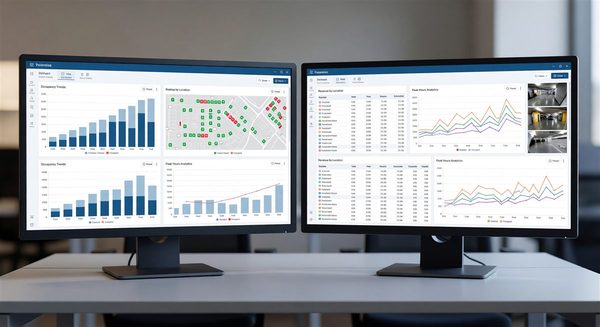
SpecifAI Parking announced a relaunched parking intelligence platform on April 28, 2026. The company’s own framing of the release is the interesting part: it described the core problem it set out to solve six years ago as fragmentation, and positioned the new platform around validating and centralising streams from PARCS, pre-booking, intercom, enforcement, and financial systems into a single reliable source of truth.
The accompanying claim — that real AI can only deliver on its promise if the data beneath it is clean, structured, and unified — is not a marketing flourish so much as an admission about where the last several years of parking analytics actually went.
Whatever one makes of any single vendor, a relaunch that leads with data validation rather than with insight is a signal worth reading, because it says something about the category rather than the company.
The integration layer is separating from both ends
Parking technology has historically bundled integration into whichever system was largest. The PARCS vendor integrated the things around it; later the analytics vendor integrated the things beneath it. In both cases integration was a project, delivered once, owned by whoever had the biggest contract.
A platform whose product is the validated, unified data layer — sitting above the operational systems and below the analytics — is a different proposition. It implies the integration is a continuously operating thing with its own reliability requirements, not a piece of implementation work that finishes.
Operators who have run multi-vendor estates will recognise why. Integrations do not fail loudly. A feed stops, a field changes meaning after a firmware update, a reconciliation that once matched drifts — and the dashboards keep rendering. The failure surfaces months later as a number nobody can defend.
Why the sequencing claim matters more than the AI claim
The genuinely useful assertion in the relaunch is the ordering: data integrity first, intelligence second. That is the opposite of how most parking analytics has been sold, and it matches what operators report.
An analytics layer over unreconciled inputs produces confident output that cannot be trusted. In parking the specific failure is well known — occupancy that disagrees with revenue, revenue that disagrees with the financial system, and enforcement records that cannot be tied to either. Each of those is a data-lineage problem, and no model resolves it.
Naming PARCS, pre-booking, intercom, enforcement, and financial feeds as the streams to be unified is a reasonable list. Intercom is the one most often omitted and it is a genuine operational record — it is where exceptions live, and exceptions are precisely what reconciliation needs to explain.
What buyers should actually ask
For anyone evaluating a platform in this category — from any vendor — the relaunch suggests the useful questions:
What does the platform do when a feed disagrees with itself? Validation is only meaningful if there is a defined behaviour on conflict. Silently preferring one source is a policy decision that belongs to the operator.
Is a broken or stalled feed visible without someone looking for it? The valuable property of a validation layer is that it fails loudly. Ask to see the alerting, not the dashboard.
Who owns the integration when the PARCS vendor pushes an update? This is the recurring cost and the recurring risk. A platform positioned as the data layer should be answering it contractually.
Can data be extracted in a documented, complete form? A single source of truth that cannot be exported is a single point of lock-in.
What is the reconciliation to the financial system of record? If the platform’s revenue figure and the finance system’s figure differ, the question is which one the organisation will defend and how the difference is explained.
The commercial signal, separately
SpecifAI’s North American route runs through a partnership with ParkSwift NA, which sells, implements, and services the platform in the region. That is worth noting on its own terms: for a buyer, the party doing the integration work and holding the service relationship is not the party building the product.
That structure is common and workable, but it changes the diligence. Implementation capability, escalation paths, and who is accountable when a feed breaks all sit with the partner, and should be evaluated as carefully as the platform.
The takeaway for the category
The signal is not that one vendor released a new version. It is that a company six years into this market rebuilt around the premise that the data underneath was the unsolved problem. Buyers evaluating any parking intelligence product should test that premise directly — by asking what happens when the inputs disagree, and by treating a confident answer about models as less informative than a specific answer about lineage.