License plate recognition technology has been used in parking for over two decades, but the last five years have seen more fundamental change than the previous fifteen combined. The shift from analog cameras with OCR processing to AI-powered computer vision systems has rewritten the performance envelope for parking LPR. Read rates that were considered exceptional in 2018 are now table stakes for mid-range systems.
But marketing claims and actual field performance are not the same thing. Every LPR manufacturer claims 99 percent accuracy. The real questions are: 99 percent under what conditions? With what plate types? At what speeds? In what lighting? And what happens with the 1 percent that fails?
This analysis examines where LPR camera technology actually stands today, what differentiates current-generation systems from their predecessors, and what parking operators need to understand when evaluating these systems for deployment.
The Technology Stack
A modern parking LPR system consists of four layers: the camera sensor, the illumination system, the processing engine, and the integration layer. Understanding each layer helps you evaluate competing products beyond marketing claims.
Camera Sensors
Current parking LPR systems use either CMOS or CCD image sensors. CMOS sensors dominate the market because they offer lower power consumption, faster readout speeds, and lower manufacturing costs. CCD sensors still appear in some high-end systems where image quality in extreme lighting conditions justifies the premium.
Resolution matters, but not as much as you might expect. A 2-megapixel camera with a well-matched lens and proper positioning will outperform a 5-megapixel camera that is poorly aimed. The critical specification is not total resolution but the number of pixels across the license plate in the captured image. Industry standards suggest a minimum of 130 pixels across the plate width for reliable character recognition. Better systems target 200 or more.
Sensor dynamic range has become increasingly important as parking facilities deploy LPR at entry and exit points where vehicles transition between bright sunlight and covered structures. High dynamic range (HDR) sensors handle these transitions without the bloom and shadow issues that plague lower-quality sensors. Look for sensors with at least 80 dB dynamic range for parking applications.
Frame rate determines how quickly the camera can capture usable images of moving vehicles. For parking applications where vehicles are moving at 5 to 15 mph, a frame rate of 15 to 30 fps is sufficient. Systems designed for higher-speed applications (toll roads, highway enforcement) operate at 60 fps or higher, but this adds cost without benefit in parking.
Illumination
License plates are designed to be retroreflective — they bounce light back toward its source. LPR cameras exploit this property by pairing the camera with an infrared (IR) illuminator positioned close to the lens axis. The IR light reflects off the plate and back to the camera, creating high-contrast images of the plate characters regardless of ambient lighting.
The shift from visible-light to infrared illumination was one of the most significant improvements in parking LPR. IR illumination works in complete darkness, does not blind drivers (the IR is invisible to the human eye), and produces consistent plate contrast independent of ambient conditions.
Current systems use LED-based IR illumination in the 850nm or 940nm wavelengths. The 850nm LEDs produce a faint red glow that is visible in dark conditions. The 940nm LEDs are truly invisible but slightly less efficient. For parking applications, either wavelength works well. The 940nm option is preferred for installations where the visible glow might concern building occupants.
Illumination angle and intensity must match the camera’s field of view and the expected plate distance. Under-illuminated plates produce low-contrast images and reduce read accuracy. Over-illuminated plates bloom, washing out characters. Quality systems include automatic intensity adjustment that responds to ambient conditions and plate distance.
Processing Engines
This is where the most dramatic technological change has occurred. Traditional LPR used template-based optical character recognition (OCR): the system identified character-shaped regions on the plate image, compared each character against a library of known character templates, and selected the best match.
Template OCR worked reasonably well for standard North American plates with clean, high-contrast characters. It struggled with non-standard plates, obscured characters, frames and covers that partially blocked characters, and degraded plates with faded paint or damage.
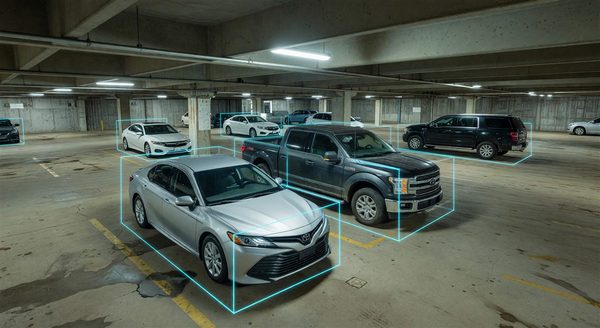
Current-generation systems use deep learning neural networks trained on millions of plate images. Instead of matching individual characters against templates, these systems analyze the entire plate image holistically, using context (character position, plate layout, state patterns) to improve accuracy.
The practical result is meaningful: deep learning systems handle the edge cases that broke template OCR. Dirty plates, partial obstructions, unusual fonts, specialty plates, and dealer plates all read at dramatically higher rates. Several studies comparing deep learning and template-based systems on the same datasets show accuracy improvements of 5 to 15 percentage points, with the largest gains on difficult plate types.
The processing can happen on-camera (edge processing) or at a central server. Edge processing reduces latency and eliminates network bandwidth concerns — important for real-time gate control. Server-based processing allows more powerful models and easier updates but adds network dependency and latency. Many current systems offer hybrid approaches: edge processing for time-critical gate decisions with server-based secondary processing for accuracy verification.
Integration Layer
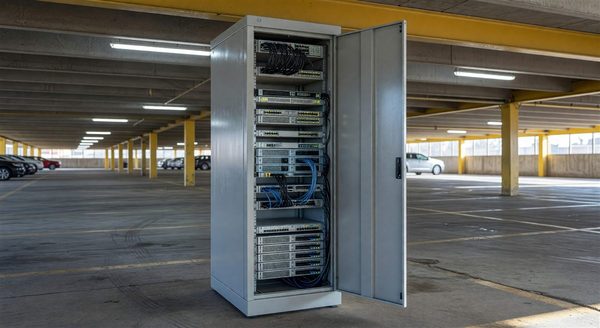
LPR systems in parking must integrate with access control systems, parking management software, enforcement platforms, and increasingly with payment systems that enable plate-based payment. The integration layer translates plate reads into actionable events: open this gate, flag this vehicle, start this parking session, apply this rate.
Integration quality varies enormously between manufacturers. Some systems offer standardized APIs and documented integration protocols that work with multiple third-party platforms. Others use proprietary protocols that lock you into a single vendor ecosystem. For parking operators, integration flexibility is a critical evaluation criterion — your LPR vendor should not dictate your choice of access control or management platform.
Accuracy: What the Numbers Actually Mean
Every LPR manufacturer publishes accuracy numbers, and those numbers are essentially meaningless without context. Here is what you need to know to evaluate accuracy claims.
Read rate vs. accuracy rate. These are different metrics, and vendors sometimes conflate them. Read rate is the percentage of vehicles for which the system produces any plate read. Accuracy rate is the percentage of reads that are correct. A system with a 98 percent read rate and a 97 percent accuracy rate has a combined correct-read rate of about 95 percent.
Test conditions matter enormously. A system tested on clean plates, in controlled lighting, at a fixed distance and angle, will produce very different numbers than the same system deployed in a real parking facility with dirty plates, variable lighting, and vehicles approaching at different speeds and angles. Ask vendors for field-verified accuracy data from installations similar to yours, not lab test results.
Plate type distribution affects accuracy. Standard passenger vehicle plates in good condition are the easiest to read. Temporary tags, paper plates, dealer plates, specialty plates, motorcycle plates, and plates from certain states with low-contrast color combinations are harder. Your accuracy will depend on the mix of plate types in your facility.
Environmental factors compound. Rain, snow, fog, and direct sunlight into the camera lens all affect accuracy. Well-designed systems handle these conditions gracefully, but no system is immune. Expect 1 to 3 percentage points of accuracy reduction during adverse weather compared to clear conditions.
A realistic accuracy expectation for a well-installed, current-generation LPR system in a parking application is 95 to 98 percent correct reads across all conditions and plate types. Systems that claim higher accuracy are either measuring under ideal conditions or using a narrower definition of accuracy than you might expect.
What Parking Operators Should Evaluate
When evaluating LPR systems for parking deployment, focus on these factors:
Accuracy on your plate mix. Request a field trial or pilot installation at your facility. Two weeks of real-world data tells you more than any spec sheet.
Latency for access control. If the LPR system is controlling gate access, the time from vehicle arrival to gate open matters. Target under 1 second from plate capture to gate command for a smooth vehicle flow experience.
Integration with your existing systems. Confirm that the LPR system integrates with your current access control and management platforms. Ask for references from installations using the same platforms you use.
Handling of read failures. What happens when the system cannot read a plate? In access control applications, this means a vehicle stuck at a gate. The failure handling design — fallback to ticket, intercom call, manual override — is as important as the read accuracy itself.
Maintenance requirements. LPR cameras need periodic cleaning (especially the IR illuminator lens), alignment verification, and software updates. Understand the maintenance schedule and whether your team can handle it or whether a service contract is required.
Total cost of ownership. Compare not just camera hardware cost but installation, licensing (many systems have annual software or cloud fees), maintenance, and eventual replacement. A camera that costs $3,000 upfront with $1,200 annual licensing fees has a different 5-year TCO than a camera that costs $5,000 with no recurring fees.
The Edge Cases That Matter
The last 2 to 5 percent of plates that LPR systems cannot read correctly are disproportionately important in parking because they directly impact customer experience and operational efficiency.
A transient parker whose plate is not read at entry requires manual intervention at exit — either an attendant or an intercom call. In an unattended facility, this means a stuck vehicle blocking an exit lane. In a high-volume facility during peak exit, one stuck vehicle can create a queue that backs into the parking structure.
The operators who handle this well design their systems with graceful degradation: automatic fallback to ticket-based or credential-based access when LPR fails, customer-facing intercoms at every lane, and staffing plans that account for LPR failure rates during peak periods.
LPR technology will continue to improve. Deep learning models get more accurate with more training data, and the installed base of LPR cameras is generating training data at an unprecedented rate. But the last 2 percent of accuracy improvement is harder than the first 20 percent, and operators should plan accordingly.
Looking Forward
The next wave of LPR innovation in parking is not about reading plates more accurately — it is about doing more with the plate read. Vehicle identification as a payment credential, seamless entry and exit without any physical interaction, integration with reservation systems, and personalized parking experiences based on vehicle identification are all in various stages of deployment.
These applications raise the stakes for LPR accuracy because they move plate recognition from a convenience feature to a revenue-critical system. When the plate read determines what a customer pays, accuracy must be demonstrably high and failure handling must be bulletproof.
For parking operators evaluating LPR systems today, the advice is straightforward: insist on field-verified accuracy data, plan for the failure cases, and select systems with integration flexibility that will support future use cases you have not yet defined. The technology is mature enough to deliver real operational value — but only when it is properly selected, installed, and maintained.