IPMI 2026 Show Floor Tech Roundup: What Vendors Actually Shipped
The IPMI Parking & Mobility Conference & Expo wrapped up its run at the Baird Center in Milwaukee on June 17. IPMI bills the expo as the largest parking- and mobility-specific technology floor anywhere, and this year’s edition drew the usual crowd — the organizer cites roughly 2,500 attendees from more than 20 countries and over 200 exhibiting solution providers, plus a Start-Up & Innovation Pavilion for newer market entrants.
What follows is a category read of the floor rather than a vendor scorecard. The honest takeaway from this cycle is that very little on display was genuinely new. The interesting story is consolidation: technologies that spent the last several years as pilots and demos are now showing up as standard, shipping configurations. Below is what that looked like, organized by technology category, with notes on what buyers should actually scrutinize.
License Plate Recognition Crosses Into Default
LPR (ANPR outside North America) was, again, the connective tissue running through nearly every booth — but the framing has shifted. A few years ago, plate reading was the headline feature. This cycle it is plumbing. Recognition is increasingly assumed to be present, and the conversation has moved to what the plate read triggers: payment, access, guidance, or enforcement.
Industry coverage entering 2026 put LPR in better than 40% of smart-parking deployments, which tracks with what the floor showed — recognition packaged into space-by-space guidance, account-based payment, and entry control rather than sold as a standalone product. AI-assisted optics and OCR have pushed accuracy claims into the high-90s under favorable conditions.
That last qualifier is where buyers should stay skeptical. “Favorable conditions” means clean plates, good light, and a cooperative angle. The number that matters is accuracy under your conditions — your plate mix, your lighting, your weather, your camera geometry. A short pilot that logs every read, every confidence score, and every miss in your actual environment will tell you more than any spec sheet headline.
Gateless and Frictionless Entry Goes Mainstream
The most visible thematic shift was the continued move toward gateless, barrier-free entry and exit. Demonstrations leaned on LPR or account-based credentials to recognize a vehicle on approach, charge the correct amount for the stay, and skip the ticket and arm entirely.
Vendors and trade coverage have been citing aggressive numbers for these conversions — revenue uplift north of 25% and payback in well under a year in some early-adopter cases. Treat those as best-case marketing figures, not planning baselines. The economics depend heavily on existing infrastructure, payment-capture rates, and how aggressively a site enforces against non-payers.
That enforcement point is the under-discussed half of the gateless story. Removing the physical gate does not remove the need to collect — it shifts it downstream to back-end reconciliation and enforcement. A gateless conversion is only as sound as its plan for vehicles that enter, park, and never pay. Several floor conversations acknowledged this directly, which is a healthier framing than the “gates are obsolete” pitch of prior years.
Computer-Vision Enforcement Matures
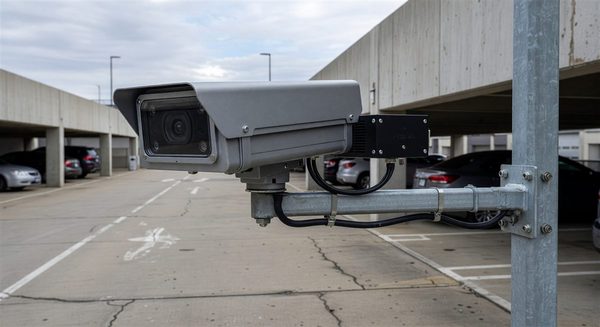
Enforcement technology on the floor reflected the same maturation curve. Mobile LPR patrol units and fixed-camera enforcement are now established categories, and the newer emphasis is on computer-vision analytics layered on top — detecting occupancy, dwell time, and policy violations from camera feeds rather than relying solely on a plate match.
A recurring and welcome theme was enforcement reframed as a data and policy tool rather than purely a revenue or punishment mechanism. The same camera infrastructure that flags a violation also produces occupancy and turnover data that feeds guidance and pricing.
For buyers, the evaluation criteria for enforcement-grade vision haven’t changed: evidentiary standards still govern. Citation evidence needs accurate, synchronized timestamps, plate images of sufficient resolution to confirm the read, and a documented chain of custody to survive appeal. Some jurisdictions also require enabling legislation or human review before an automated citation issues. None of that is solved by better cameras alone.
EV Charging Stops Being a Side Booth
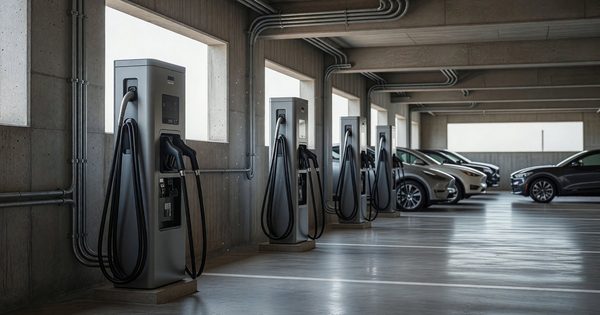
EV charging integration moved closer to the center of the parking-technology conversation this year rather than sitting in its own corner. The framing on the floor was less about selling chargers and more about managing the parking around them — using occupancy detection and guidance to steer drivers to open charging stalls, and using LPR or sensors to identify vehicles occupying an EV space without actively charging.
This is a meaningful integration point. “ICE-ing” and charge-hogging are operational and enforcement problems as much as electrical ones, and the platforms that treated EV stalls as managed, enforceable inventory — rather than as standalone hardware — were making the more credible pitch. The practical question for operators is whether charging session data and parking session data actually live in one reconciled system, or in two systems with a dashboard bolted across them.
Dynamic Pricing and Sensor Fusion
Demand-based dynamic pricing showed up as a more concrete, shipping capability than in past cycles. The pitch is machine-learning models adjusting rates by time, demand, and event conditions, with vendors citing single-digit to low-double-digit annual revenue gains. As with the gateless numbers, those figures are vendor-reported and highly site-dependent.
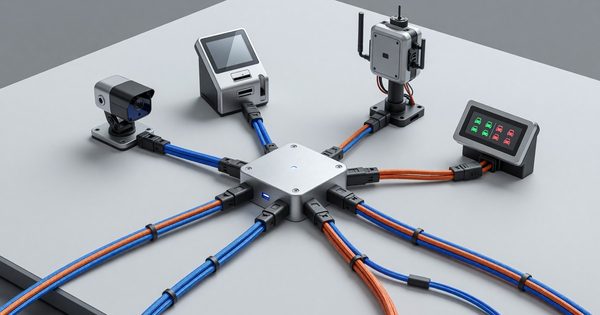
Underpinning both pricing and guidance was a quieter but more durable trend: multi-sensor fusion. Rather than betting on a single detection modality, several platforms combine camera analytics with in-ground or overhead sensors so that one source validates another. The logic is sound — camera counts and stall-level sensor status correcting each other yields cleaner occupancy data, which in turn makes both guidance and any demand-based pricing more trustworthy. Fusion is unglamorous, but it addresses the single biggest weakness of demand-driven systems: garbage occupancy data produces garbage pricing.
What to Take From the Floor
The honest summary of IPMI 2026 is that the headline technologies — LPR, gateless entry, vision enforcement, EV management, dynamic pricing — are no longer emerging. They are converging into integrated platforms where the plate read or sensor event drives everything downstream.
For anyone evaluating against this backdrop, the useful questions are integration questions, not feature questions. Does payment, access, enforcement, and EV data reconcile in one system? Are the accuracy and revenue numbers measured under conditions resembling yours, or under a vendor’s best case? And does the gateless or automated-enforcement story include a concrete answer for the vehicles that don’t pay? The booths that answered those questions plainly were the ones worth the second conversation. The rest were selling the same components in a brighter wrapper.