Cashless Payment Terminal Hardware in Parking: EMV, Contactless, and QR Standards
The payment terminal inside a parking pay station is, from a regulatory and certification perspective, one of the most constrained components in the entire facility. Payment card industry standards, EMV requirements, and ADA accessibility rules all intersect at the payment terminal, and the certification process for payment hardware is sufficiently rigorous that only a small number of globally certified modules dominate the market.
Understanding what those certifications mean, why they exist, and what they require helps parking technology buyers evaluate claims, avoid procurement mistakes, and understand why payment hardware choices are less flexible than they might appear.
The EMV Standard and What It Mandates
EMV (Europay, Mastercard, Visa — the originating organizations, though now governed by EMVCo) defines the technical standards for chip-based payment card transactions. EMVCo’s specifications cover both the card and the terminal, ensuring interoperability globally.
In parking applications, EMV compliance means the payment terminal must:
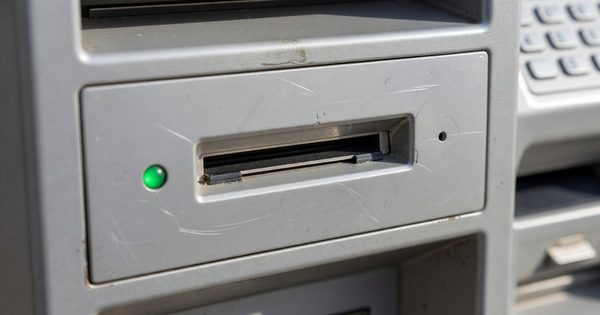
- Support contact chip card transactions (the “dip” interaction where the card is inserted)
- Implement cryptographic authentication of the card using public key infrastructure
- Support cardholder verification methods (CVMs) appropriate for the transaction type
- Handle decline, referral, and approval responses per the specification
The EMV liability shift — implemented in the US in 2015, later than most other markets — means that liability for fraudulent transactions shifts to whichever party (issuer or acquirer/merchant) is least compliant. A parking operator running a non-EMV terminal bears liability for counterfeit card fraud that would otherwise rest with the card issuer.
Contactless EMV: NFC in Parking
Contactless EMV (cEMV) uses NFC (ISO/IEC 14443) to allow card or mobile wallet taps at the terminal. The same cryptographic authentication framework as contact EMV applies, but without physical card insertion.
Contactless EMV has driven significant changes in parking payment terminal design:
Antenna design: NFC antennas for contactless payment must meet EMVCo performance specifications across all supported card and device types — including the full range of contactless Visa, Mastercard, Amex, Discover, and Interac Flash cards, plus Apple Pay, Google Wallet, Samsung Pay, and other NFC wallets. Antenna placement in the pay station enclosure affects performance; metal surrounding the antenna degrades NFC field strength.
Transaction speed: Contactless EMV transactions complete in under 1.5 seconds in optimized implementations. This is the primary driver of contactless adoption in parking — compared to a chip dip transaction (5–10 seconds) or mobile app payment (15–30 seconds including app launch), a tap is the fastest payment interaction available.
Floor limits: Contactless transactions under a configured floor limit can complete without PIN entry, significantly improving throughput in high-volume environments. US contactless floor limits (up to $200 at most issuers) are the most permissive globally, benefiting parking use cases where transactions typically fall below $30.
PCI PTS Certification: What It Covers
PCI PTS (PIN Transaction Security) is the certification standard maintained by the PCI Security Standards Council that governs the security of physical payment terminal hardware. Not to be confused with PCI DSS (which covers data security in payment environments broadly), PCI PTS specifically addresses:
Physical security: Terminal enclosures must resist physical attacks — prying, drilling, chemical attacks. Tamper-evident seals and active tamper detection (the terminal zeroes its cryptographic keys if physical intrusion is detected) are required.
Cryptographic key management: PIN encryption keys, master keys, and card authentication keys are managed in a secure element within the terminal. Key injection must follow defined secure procedures.
Logical security: The terminal’s firmware must be authenticated and the execution environment protected against malicious code injection.
PCI PTS POI (Point of Interaction) versions advance through major revisions; PTS 6.x is current. Terminals with older PTS versions may not be accepted by acquiring banks or card brands as certifications expire. When evaluating payment hardware, verify the current PTS certification version and the expiration date of that certification.
QR Code Payment Integration
QR code payment approaches have taken several forms in parking:
Customer-presented QR: The parking app or mobile wallet displays a QR code on the phone screen; a scanner in the pay station reads it. This is common in transit and retail internationally but has limited US parking deployment outside transit applications.
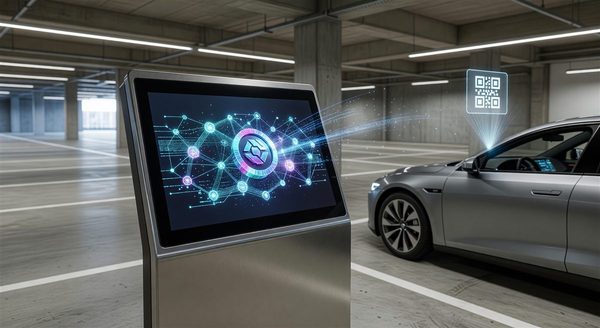
Merchant-presented QR: A static or dynamic QR code on the pay station is scanned by the customer’s phone camera. The customer completes payment in their app (Venmo, PayPal, WeChat Pay) and a payment confirmation is returned to the parking system. This approach requires no additional terminal hardware beyond a label or display.
License plate as identifier: Some parking systems use the license plate number as the payment identifier in a mobile app flow, bypassing physical terminal interaction entirely. LPR at exit confirms payment status.
QR payment integration requires software integration between the parking management platform and the payment provider’s API — the hardware implications are minimal compared to EMV terminal integration.
ADA Accessibility Requirements for Payment Hardware
The Americans with Disabilities Act imposes specific requirements on payment terminal hardware and placement in parking applications:
Reach range: Operable parts must be within the 15"–48" forward reach range and 9"–54" side reach range for wheelchair users.
Keypad layout: Numeric keypads must conform to ITU-T E.161 layout (telephone keypad) with tactile distinction on the “5” key.
Audio output: Terminals that accept PIN must provide a private audio output option (typically a headphone jack at the terminal) for users who cannot read the display.
Display contrast: Minimum 3:1 contrast ratio for display text against background.
These requirements apply to the terminal hardware as installed in the facility, not just the device itself in isolation. Mounting height and orientation that meets ADA requirements must be verified in the as-installed configuration, not just the hardware specification.
FAQ
How often do payment terminal certifications expire? PCI PTS certifications have defined validity periods — POI Core device approvals are typically valid for 5 years from the approval date. After expiration, the terminal can continue to be used in installed deployments, but may no longer be listed as a currently approved device by card brands. Acquiring banks may eventually require terminal upgrades. Check the PCI SSC’s list of approved PTS devices for current certification status.
What is the difference between a payment terminal and a payment facilitator in parking? A payment terminal is the physical hardware that processes the payment interaction. A payment facilitator (PayFac) is a business entity registered with card brands that processes payments on behalf of merchants — simplifying PCI DSS compliance and settlement. In parking, a PayFac-integrated payment platform handles PCI DSS compliance scope on behalf of the parking operator, reducing the operator’s direct obligation to maintain a full PCI DSS assessment.
Are QR code payments subject to the same PCI DSS requirements as card payments? QR code payments using bank-linked apps (Venmo, CashApp, Zelle) may route through ACH rather than card networks, with different compliance frameworks. QR payments that run on card networks (Mastercard QR, Visa QR) are within PCI DSS scope. The specific compliance framework depends on which payment rail is used, which is determined by the specific payment provider integration.
What happens when a parking pay station payment terminal is tampered with? A PCI PTS-compliant terminal that detects physical tampering (detected by sensors monitoring the enclosure) enters a tampered state, zeros all cryptographic keys, and ceases to process transactions. The terminal displays a fault code and requires service intervention. This is the intended behavior — a terminal that has been physically compromised must not continue processing sensitive payment data.