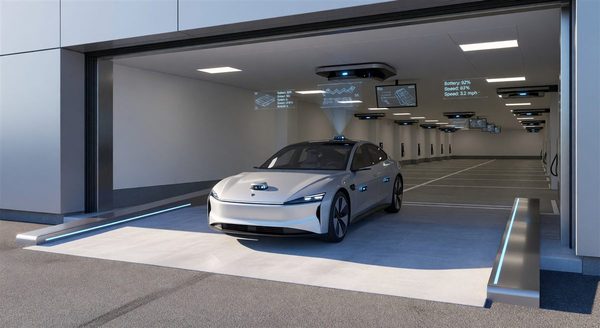
Connected Vehicle Parking Protocols: How Cars Will Communicate with Parking Infrastructure
The connected vehicle ecosystem — where vehicles exchange data with infrastructure, other vehicles, and backend services — is being built primarily to address safety applications (intersection collision avoidance, emergency vehicle preemption, wrong-way driver alerts). But the same communication infrastructure has significant implications for parking: vehicles that can communicate with parking infrastructure can identify available spaces before arrival, authenticate automatically at entry, pay without driver interaction, and navigate within facilities with precise guidance.
This article examines the standards and protocols defining vehicle-parking communication, the deployment timeline, and the infrastructure implications for parking operators.
The V2X Communication Stack
Vehicle-to-Everything (V2X) communication encompasses several distinct communication modes:
V2I (Vehicle-to-Infrastructure): The vehicle communicates with roadside infrastructure — traffic signals, variable message signs, parking facilities. For parking applications, this is the primary relevant mode.
V2V (Vehicle-to-Vehicle): Direct vehicle-to-vehicle communication for safety applications. Less directly relevant to parking.
V2N (Vehicle-to-Network): Vehicle communication via cellular network to backend services. Relevant for parking reservation and account management.
V2P (Vehicle-to-Pedestrian): Safety communication between vehicles and pedestrians carrying devices. Relevant in parking facility pedestrian safety applications.
Dedicated Short-Range Communication (DSRC)
DSRC, defined in the IEEE 802.11p standard (now subsumed into 802.11bd), operates at 5.9 GHz and provides low-latency V2X communication in a peer-to-peer model — no cellular network infrastructure required.
Technical characteristics:
- Frequency: 5.850–5.925 GHz (allocated spectrum in US, EU, and other markets)
- Range: 300–1,000 meters direct V2X; shorter in congested environments
- Latency: < 10 ms, suitable for safety applications
- Data rate: Up to 27 Mbps
For parking applications, DSRC enables vehicles to receive parking availability data from roadside units as they approach a facility, interact with gate infrastructure for automatic entry/exit, and receive in-facility navigation guidance.
US deployment status: The FCC’s 2020 spectrum reallocation decision reduced the allocated spectrum for DSRC and introduced unlicensed WiFi use in the 5.9 GHz band, effectively deprioritizing DSRC in favor of C-V2X in US deployments. Existing DSRC deployments continue operating, but new infrastructure investment in the US has largely shifted to C-V2X.
Cellular V2X (C-V2X)
C-V2X, defined in 3GPP Release 14 (LTE-V2X) and further enhanced in Release 16 (5G NR-V2X), provides V2X communication over cellular network infrastructure.
Two operating modes:
PC5 mode (sidelink): Direct device-to-device communication using the PC5 interface, without requiring cellular network coverage. Similar to DSRC in function — direct short-range communication between vehicles and infrastructure. Latency similar to DSRC.
Uu mode (network): Communication via the cellular network (base station infrastructure). Higher latency than PC5/DSRC but provides cloud connectivity and broader geographic reach.
For safety applications (collision avoidance, intersection management), PC5 sidelink mode is used due to its low latency. For parking reservation and account management, Uu mode cellular connectivity is more relevant.
US deployment trajectory: C-V2X is the direction of US federal investment and automaker commitment. USDOT’s NHTSA proposed V2X technology rules reference C-V2X. Major automakers (GM, Ford, Stellantis, and others) have committed to C-V2X deployment in new vehicles.
Parking-Specific Communication Applications
Pre-Arrival Space Availability
A vehicle approaching a parking facility can receive real-time space availability data through V2I communication with roadside units at the facility entrance or through V2N cellular communication with the parking facility’s management system.
This capability is partially available today through consumer navigation apps (Google Maps parking availability, Waze parking features), but the data latency and specificity of current app-based approaches is limited. V2I delivery of occupancy data directly to the vehicle’s navigation system provides a lower-latency, higher-specificity channel that can guide the driver to a specific zone or level rather than just indicating general availability.
Automatic Authentication and Gate Control
Vehicles with C-V2X or DSRC equipment and registered parking credentials can authenticate at entry and exit without driver interaction:
- Vehicle broadcasts its credentials over V2I as it approaches the entry lane
- The parking access control system verifies the credential against the permit/reservation database
- Gate opens automatically without requiring the driver to present a card, tap a phone, or interact with a pay station
This is the connected-vehicle equivalent of LPR-based frictionless entry, with the advantage that the vehicle ID is transmitted directly rather than read from a plate. Authentication can occur while the vehicle is still 100+ meters from the gate, giving the gate ample time to open before the vehicle arrives.
In-Facility Navigation
Vehicles with V2I capability can receive precise navigation guidance within a parking facility — guidance to a specific available space, directions through the facility layout to the correct zone, and real-time updates if the initially assigned space becomes unavailable.
In-facility V2I navigation requires infrastructure deployment within the parking facility (not just at the entrance) — roadside units at decision points or WiFi-based V2X alternatives.
Standards in Development
SAE J2945/1 (V2X Safety Communication Standard): Defines the message formats and communication requirements for V2X safety applications in the US. Parking applications may be addressed in future revisions or in separate application layer standards.
ETSI ITS standards (European): The European Telecommunications Standards Institute defines a parallel V2X standards framework for European deployments. ETSI EN 302 637-2 (CAM — Cooperative Awareness Message) defines the basic vehicle presence broadcast that is relevant for parking authentication applications.
ISO 21177 (V2X Application Security): Defines security frameworks for V2X application layer authentication and authorization — the framework that would govern parking credential authentication via V2X.
Infrastructure Implications for Parking Operators
Roadside Unit Deployment
V2I communication requires infrastructure-side hardware: Roadside Units (RSUs) that communicate with vehicles over DSRC or C-V2X. For a parking facility, RSUs at the entry and exit lanes — and potentially within the facility for in-facility guidance — would be required to support vehicle-native V2X parking interaction.
RSU hardware costs have declined but remain significant. For parking operators evaluating infrastructure investments today, waiting for clearer standards convergence and cost reduction before specifying RSU hardware is prudent unless they are participating in a specific smart city program that includes RSU deployment.
Cloud Platform Integration
The connection between V2X parking authentication and the parking management platform requires cloud API integration. A vehicle’s V2X authentication credential must be validatable against the operator’s permit and reservation database in real time. This is an extension of the existing LPR and mobile credential integration architecture rather than an entirely new system.
FAQ
When will connected vehicle parking applications be available to mainstream users? V2X vehicle deployment in new vehicles is beginning in the 2024–2027 timeframe for major automaker models. Infrastructure deployment lags vehicle deployment — V2I parking applications require both equipped vehicles and equipped infrastructure. Meaningful availability of connected vehicle parking applications is a 2027–2032 timeframe in early-adopter markets, with broader availability thereafter as vehicle and infrastructure penetration increases.
Do parking operators need to do anything now to prepare for connected vehicle integration? Ensure that the parking management platform you are selecting or deploying has a well-documented API that can be extended to support V2X credential authentication when the standards and hardware mature. Platform lock-in that prevents API extensions would be the primary barrier to future connected vehicle integration. Following the APDS standards for parking data exchange also positions operators well for the open data ecosystem that connected vehicle applications will depend on.
Are there cybersecurity risks specific to V2X parking authentication? Yes — V2X communication authentication security is a significant standards development area. Broadcast V2X messages that are not cryptographically authenticated could be spoofed — a fraudulent vehicle broadcasting another vehicle’s credentials. The V2X security credential management system (SCMS) being developed by USDOT and automakers provides certificate-based authentication that addresses this. Parking V2X implementations should require and verify SCMS-authenticated credentials rather than accepting unauthenticated broadcasts.
Is C-V2X backward compatible with DSRC infrastructure? C-V2X PC5 sidelink and DSRC (802.11p) are not directly compatible — they use different modulation schemes and cannot communicate with each other. Dual-mode RSUs that support both standards exist for transitional deployments. However, as the US market has largely committed to C-V2X, the practical approach for new RSU deployments is C-V2X only unless backward compatibility with existing DSRC infrastructure is specifically required.