Contactless and Frictionless Parking: Technology Stack for Gate-Free Access
The ideal parking experience — from the driver’s perspective — is arriving at a facility, driving in, parking, and driving out without stopping, touching anything, or interacting with any equipment. No ticket to take, no card to tap, no receipt to collect at a pay station, no interaction at an exit lane.
This experience, sometimes called “frictionless parking” or “touchless parking,” is technically achievable with current technology. The question for parking operators is not whether it’s possible but what the operational and financial model looks like, and whether the customer experience benefit justifies the technology complexity and the changes to familiar workflows.
The Technology Components
Frictionless parking requires the successful integration of several technology layers:
License Plate Recognition as the Primary Identifier
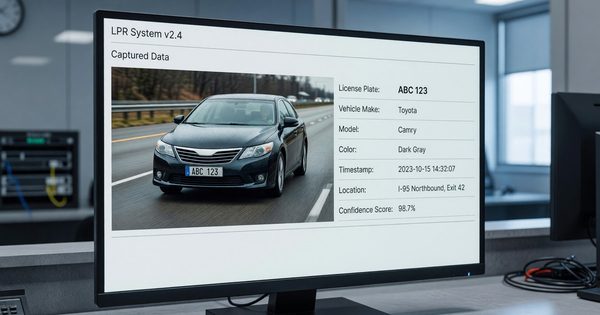
LPR is the foundation of frictionless parking. Instead of a ticket or access credential, the vehicle’s license plate serves as the unique session identifier from entry to exit.
Entry: LPR camera at the entry lane reads the plate as the vehicle approaches. If the vehicle has a valid pre-registered credential (monthly permit, pre-booked reservation, or active account), the gate opens automatically without stopping. For walk-up transient drivers, the entry read opens the transaction — a pre-authorization hold is placed on a payment method tied to the plate, and the gate opens.
Exit: LPR camera at the exit lane reads the plate, calculates the session fee, charges the pre-authorized payment method, and opens the gate without any driver interaction.
The driver experience from both directions: drive up, pause briefly (2–4 seconds for LPR capture and gate response), proceed. No tickets, no pay station interaction, no receipt kiosk.
Payment Pre-Registration and Pre-Authorization
Walk-up drivers who want frictionless parking must have a registered account with a payment method on file. Payment pre-registration happens through:
Parking operator mobile app: The driver creates an account, registers their plate and payment method. Upon entering any facility in the operator’s network, their plate is recognized and payment is charged to their registered method on exit.
Third-party aggregator integration: Platforms like ParkMobile or Flowbird allow drivers to create an account once, register plates and payment, and use frictionless parking at any participating facility.
Pre-booking platforms: A driver who has booked and paid for parking in advance through a reservation platform has their plate registered as pre-paid for that session — entry and exit are both automatic.
Pre-Authorization Mechanics
For walk-up drivers without advance reservations, pre-authorization (a temporary hold on the payment card, similar to a hotel check-in hold) secures the payment method at entry. The actual charge is processed on exit when the total fee is calculated.
Pre-authorization requires:
- Payment method tokenization (storing payment credentials securely, not full card numbers, per PCI DSS requirements)
- Sufficient pre-authorization amount to cover the maximum expected session fee
- Automatic capture and settlement at exit
- Pre-authorization release for sessions that do not result in a charge
The PCI DSS implications of stored payment tokens are significant — the parking operator’s payment processing environment must handle token storage securely, typically through a PCI-compliant payment gateway that manages tokenization.
Fallback Mechanisms
Truly frictionless systems must handle the scenarios where LPR fails to read a plate:
Low-confidence reads: If the entry LPR cannot read the plate with sufficient confidence (dirty plate, unusual plate format, obstructed view), the system should fall back to either an intercom interaction or a ticket-based entry — not simply refuse entry or issue an incorrect transaction.
Walk-up drivers without accounts: Facilities that want to serve all drivers, not only those with pre-registered accounts, need a fallback path for unregistered walk-up drivers. Pay station interaction for unregistered drivers is the typical approach — they stop and pay at a kiosk, while registered drivers flow through without stopping.
Equipment failures: If the LPR camera fails, gate operators default to open (to prevent trapping vehicles in the facility) or fall back to a manual attendance mode. The operational procedure for LPR failure must be documented and staff must be trained to execute it.
Operational Model Implications
Revenue Collection Without Physical Interaction
Traditional parking revenue collection relies on physical interaction — the driver touches a pay station or interacts with a cashier. Frictionless parking moves revenue collection to the account/payment system layer. This requires:
Pre-registration friction: The driver must register an account and payment method at some point. This is a one-time setup cost for the customer that reduces friction on all subsequent visits but adds friction to the first visit.
Payment failure handling: A driver whose payment method fails at exit must be handled without creating a lane obstruction. Soft failure modes (allow exit, send billing notification) are more operationally practical than hard failure modes (hold gate closed until payment is resolved).
Dispute resolution: Without a paper receipt, transaction disputes rely on email receipts and account transaction history. Clear digital evidence trails are essential for dispute resolution credibility.
Gate Removal as the Ultimate Frictionless Model
Some operators have removed physical gates entirely, using LPR and automatic billing to create genuinely gateless facilities. A vehicle drives in without stopping, parks, and drives out without stopping — the transaction is entirely invisible to the driver during the parking experience, handled through account billing.
This model requires robust payment pre-registration and enforcement mechanisms for drivers who exit without valid payment on file. LPR-based enforcement — automated citation to the registered owner of the plate — is the enforcement backstop for non-paying vehicles.
Gateless facilities achieve the ultimate frictionless experience but require a higher level of confidence in LPR accuracy and billing systems than gated facilities, where the gate provides a physical backstop against non-payment.
Accessibility Considerations
Frictionless parking models that require smartphone account registration create accessibility barriers for drivers who:
- Do not have smartphones
- Are not comfortable with mobile app account creation
- Have visual or motor impairments that make app interaction difficult
Accessible frictionless parking must provide equivalent alternatives — phone-based registration, in-person account setup at an attended booth, or assisted payment options at accessible pay stations.
ADA requires that parking facilities provide accessible service. A frictionless system that is significantly less accessible than the alternative for users with disabilities creates legal exposure.
FAQ
What LPR accuracy is required for viable frictionless parking operations? Industry experience suggests that LPR read accuracy of 97–98%+ is the practical threshold for high-volume frictionless operations without unacceptable exception handling overhead. At 95% accuracy in a facility processing 1,000 vehicles per day, 50 transactions per day require manual resolution — potentially manageable. At 2,000 vehicles per day with the same accuracy, 100 transactions require resolution — likely exceeding the facility’s administrative capacity. Accuracy should be validated in the specific installation environment, not just vendor lab conditions.
How does frictionless parking affect peak throughput capacity? Frictionless entry lanes (LPR + pre-authorized accounts) process vehicles in 2–4 seconds vs. 8–15 seconds for ticket dispensers and 30–60 seconds for pay-on-entry kiosks. This throughput improvement can significantly increase peak capacity in high-demand facilities. Facilities that currently experience entry queue backups during peak demand benefit the most from frictionless entry.
Can existing parking facilities be retrofitted for frictionless operations? Yes — most existing parking facilities can be retrofitted with LPR cameras at entry/exit, software upgrades to the PARCS for LPR-based transaction management, and a mobile app or web portal for driver account registration. The capital cost of retrofitting depends primarily on camera installation and any cabling required for network connectivity. A software platform that supports LPR-based frictionless parking is the more common limiting factor than physical hardware.
How are parking taxes and surcharges handled in frictionless billing? Parking taxes (city parking taxes, which can be substantial in major markets), facility surcharges, and applicable sales taxes must be calculated and displayed in the billing statement even in frictionless transactions where no physical receipt is presented. Electronic receipts must include the same tax breakdowns as paper receipts. The PARCS platform must be configured with correct tax rates and the billing system must apply them correctly to all frictionless transactions.