Computer Vision Parking Analytics: Beyond LPR to Behavioral and Safety Insights
License plate recognition is the most widely deployed computer vision application in parking, but it represents only a fraction of what modern computer vision systems can extract from the video feeds already present in most parking facilities. AI-powered video analytics platforms are extending the analytical reach of parking cameras into pedestrian safety, traffic flow analysis, operational efficiency metrics, and behavioral pattern recognition.
This article examines the computer vision analytics applications extending beyond LPR in parking facilities, the edge AI infrastructure enabling them, and the accuracy and privacy considerations that govern deployment.
The Analytics Expansion Beyond LPR
Vehicle and Space Occupancy Detection
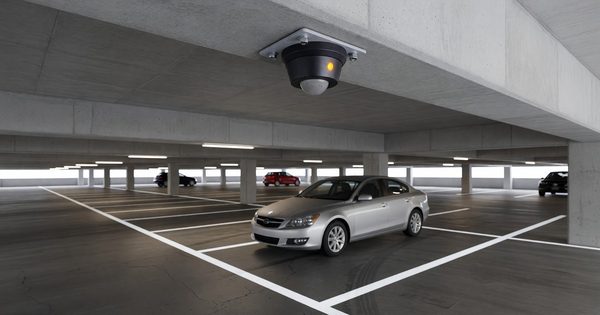
Per-space occupancy detection from overhead cameras is the direct computer vision alternative to per-space sensors. A single camera covering 8–20 spaces provides occupancy data for each space in its field of view through continuous image analysis.
Modern occupancy detection models achieve accuracy above 95% in normal lighting conditions. The primary differentiation from sensor-based occupancy detection is infrastructure economics: at scale, cameras covering multiple spaces are significantly cheaper per space than individual sensors. The tradeoffs — sensitivity to lighting conditions, computational overhead for image processing, and privacy management — vary by application.
Object detection models for occupancy: Current-generation models (YOLO variants, EfficientDet, and purpose-built parking occupancy models) classify spaces in camera views at frame rates of 1–10 FPS adequate for parking applications. Running these models on edge hardware in the camera eliminates the bandwidth of transmitting video to a central server.
Pedestrian Safety Detection
Parking structures are environments where vehicle-pedestrian conflicts occur. Computer vision analytics can detect:
Wrong-way pedestrian detection: Pedestrians walking in drive aisles against traffic flow — a safety hazard — can be detected and trigger alerts to security staff or audible warnings in the facility.
Pedestrian proximity to moving vehicles: Computer vision systems that track both vehicle and pedestrian positions can identify proximity events (a pedestrian within a defined distance of a moving vehicle) and trigger alerts. This is analogous to industrial safety systems used in manufacturing environments.
Crossing zone violations: Vehicles failing to yield at marked pedestrian crossings within the facility — a common safety issue in multi-use parking structures — can be flagged by CV analysis.
These applications contribute to parking facility liability management and safety improvement programs beyond their security value.
Wrong-Way Vehicle Detection
One-way drive aisles in parking structures are a common source of accidents when drivers enter from the wrong direction. Computer vision systems detect:
- Vehicles traveling against the indicated flow direction
- Vehicles entering through exit-only lanes
- Vehicles making prohibited turns at lane intersections
Alerts can trigger audible warnings, dynamic signage changes, or staff notifications. The deterrent and liability documentation value of systematic wrong-way detection is significant in high-turnover facilities.
Dwell Time and Behavioral Analysis
Dwell time analysis — how long vehicles remain in specific facility areas, how long pedestrians spend in security-sensitive areas — provides both operational and security intelligence.
Loading zone compliance: Computer vision can measure how long vehicles occupy loading zones, identifying chronic overstay violations that create congestion and providing objective data for loading zone policy adjustments.
Entry/exit queue length: Camera views of entry and exit lanes can measure queue lengths and wait times, providing operational data for staffing decisions and lane configuration optimization.
Loitering detection: Extended pedestrian presence in areas without normal pedestrian activity (equipment rooms, stairwell landings, vehicle storage areas) can trigger security alerts.
Vehicle Damage Detection
Some advanced computer vision deployments capture high-resolution vehicle images on entry and compare them against exit images to document damage that occurred during the parking session. This application requires high-resolution cameras positioned to capture the full vehicle exterior and computer vision models trained to detect and localize damage (dents, scratches, broken components).
Vehicle condition documentation reduces liability disputes and provides evidence for damage claims. This application is most common at airport parking, valet parking, and high-value vehicle storage facilities.
Edge AI Infrastructure for Parking Analytics
Why Edge Processing?
Running computer vision analytics at the edge — on the camera or a local compute node — rather than transmitting raw video to a central server provides several advantages:
Bandwidth reduction: A 1080p camera at 30 FPS generates approximately 6–8 Mbps of H.264 video. For a 100-camera facility, that’s 600–800 Mbps of aggregate video bandwidth. Edge processing reduces this to metadata streams (detection events, counts, anomalies) that require kilobits rather than megabits per camera.
Latency: Safety applications (pedestrian proximity alerts, wrong-way detection) benefit from near-real-time response. Edge processing eliminates the round-trip latency to a central server.
Privacy: Edge processing can analyze video and discard the raw images at the edge, transmitting only metadata (space occupied/vacant, detection event, count). This privacy-by-design approach reduces the regulatory exposure from storing large volumes of video containing identifiable data.
Camera Edge Compute Specifications
IP cameras with edge AI capability differ from standard surveillance cameras:
GPU or NPU (Neural Processing Unit): AI-capable cameras include dedicated processing units optimized for neural network inference. NVIDIA Jetson modules, Intel Movidius, and Ambarella SoC with NPU are common in high-capability edge cameras.
Model capacity: Edge cameras are typically capable of running models of limited size (quantized 8-bit models, compressed architectures). More complex analytics may require an on-premise GPU server rather than camera-embedded inference.
SDK and model deployment: Camera manufacturers provide SDKs for deploying custom analytics models. AXIS ACAP, Hikvision DeepinMind SDK, Bosch Video Analytics SDK, and open platforms like NVIDIA DeepStream are the dominant frameworks.
Accuracy Thresholds and Operational Calibration
Computer vision analytics accuracy depends on:
Training data quality: Models trained on diverse, representative datasets generalize better to new environments. Request evidence of training data diversity and testing in environments similar to your deployment when evaluating vendors.
Environmental calibration: Most production CV analytics systems require calibration to the specific camera placement, lighting conditions, and typical vehicle and pedestrian profiles of the deployment. Factory defaults are a starting point; deployment-specific calibration improves accuracy.
Ongoing model maintenance: As vehicle designs change (new body styles, new lighting configurations), models may require retraining or updates. Confirm vendors’ model update practices and timelines.
Typical accuracy targets for deployed parking CV analytics:
- Occupancy detection: 95%+ under normal lighting
- Wrong-way detection: 92%+ with acceptable false alarm rate
- Pedestrian safety proximity: 90%+ with tunable sensitivity/false alarm tradeoff
FAQ
How should parking operators approach privacy for computer vision analytics? Privacy-by-design for CV analytics: process and discard identifiable images at the edge rather than storing raw video longer than necessary; define explicit retention limits for any stored video; avoid analytics functions that produce facial identification outputs unless there is a specific, justified security need; disclose CV analytics use to facility users through signage. Consult applicable state privacy laws for jurisdiction-specific requirements.
What is the cost difference between camera-based and sensor-based occupancy detection for parking? At small scale (under 50 spaces), per-space sensor costs ($80–150 per space installed) are often competitive with camera coverage costs (camera + edge compute installation, $800–2,000 per camera covering 8–15 spaces). At scale (500+ spaces), camera-based detection typically provides lower per-space cost, lower installation disruption (no in-ground installation required), and more flexibility for zone reconfiguration. The crossover point varies by labor rates and facility configuration.
Can computer vision analytics integrate with access control systems? Yes — CV analytics platforms that detect specific events (unauthorized vehicle in restricted area, individual accessing equipment rooms after hours) can trigger access control responses (lock-down alerts, door lock commands) through integration with the access control platform. This integration requires API connectivity between the CV analytics platform and the access control system and pre-defined event-response mappings.
Are there cybersecurity concerns specific to AI-enabled cameras? AI-enabled cameras are sophisticated IP network devices with larger attack surfaces than simple IP cameras. In addition to standard IP camera security practices (firmware updates, credential management, network isolation), AI cameras introduce risks related to model poisoning (adversarial inputs designed to fool the CV model) and data exfiltration through the analytics data streams. Apply network isolation, access control, and monitoring appropriate for network-connected OT devices to AI camera deployments.