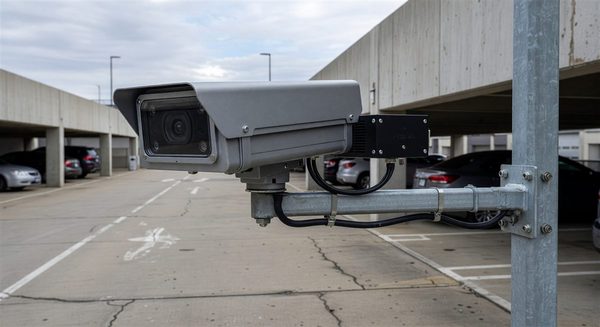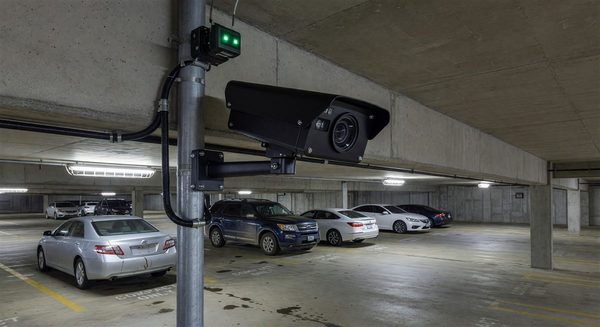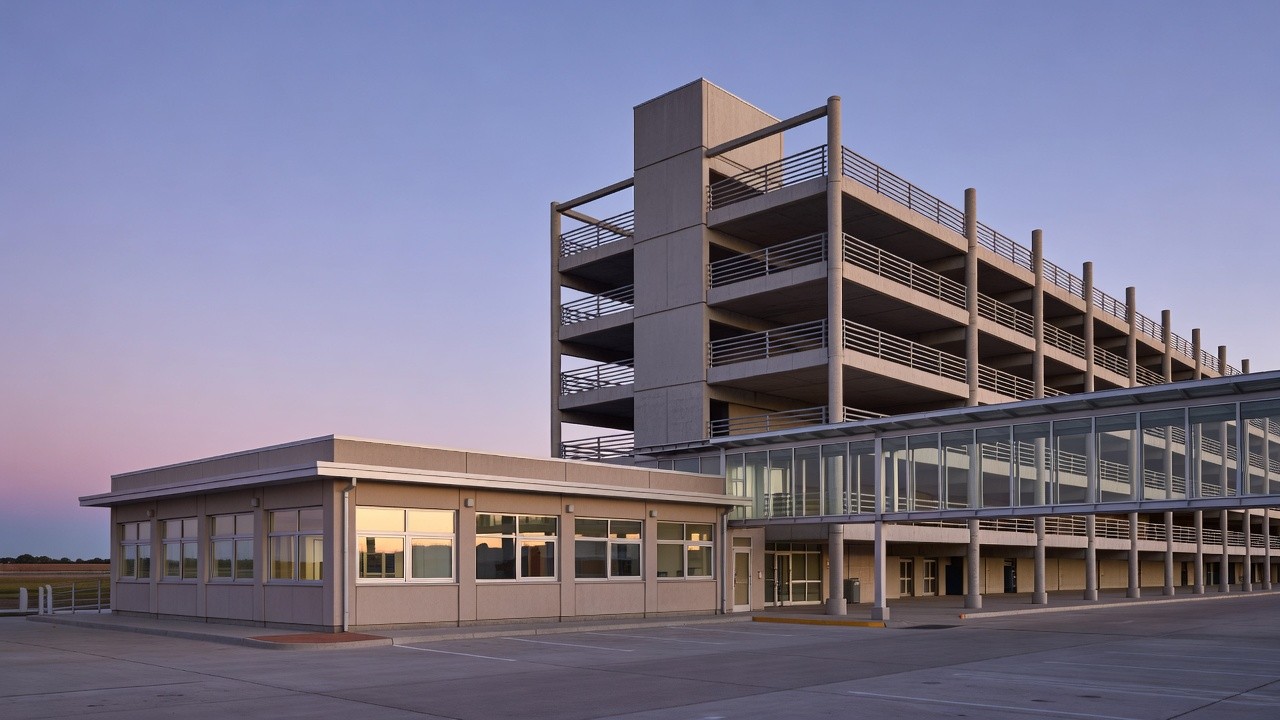
Bishop International Airport in Flint, Michigan went live with Metropolis’s AI parking system on October 1, 2025, across all of its parking facilities. It was the first Michigan airport and, at the time, the fifth nationally to deploy that system. The mechanism is camera-based: the system recognizes vehicles entering and exiting, and the transaction resolves without the driver stopping to pay.
It is worth being direct about what is available to analyze and what is not. Operator-reported outcome data from this deployment — throughput change, revenue capture rate, recognition accuracy in service, dispute volume — has not been published. Anyone offering you a performance figure for FNT is extrapolating. What the deployment does support is a reading of the architecture and of the procurement decisions it implies, which is the more useful thing for a buyer evaluating this category anyway.
The Architectural Shift Underneath It
The phrase “checkout-free” describes the customer experience. The engineering claim underneath it is more specific, and it is where this class of system differs from conventional LPR.
Traditional license plate recognition in parking is a matching system. It reads a plate at entry, reads a plate at exit, and matches the strings. Everything depends on two discrete reads being correct, and the failure mode is a mismatch that requires human intervention at the exit lane — which is exactly the moment when intervention is most expensive, because there is a queue behind it.
The digital-twin approach is a tracking system. It builds a persistent representation of the vehicle rather than a string, and it uses more than the plate: vehicle class, color, body geometry, and other visual signature elements. The plate becomes one attribute of a tracked object rather than the identity of the transaction.
The practical difference shows up in the cases that break matching systems. A plate obscured by snow, a bike rack, a trailer hitch, or a dealer frame. A temporary tag. A rear plate on a vehicle that entered showing a front plate. A plate read correctly but transposed by one character. In a matching system every one of those is an exception. In a tracking system, several of them are recoverable from the other attributes.
Why Airports Are the Right First Market
The deployment pattern — airports early, before other segments — is not an accident, and it is instructive about where the value actually is.
Airport parking has an unusually favourable set of characteristics for this technology. Dwell times are long, which means the system has time to resolve ambiguity rather than needing an instant decision. Transaction values are high, which means the revenue recovered from reducing leakage and exceptions is large per event. The exit queue is the operational pain point that airport parking managers care most about, because it directly affects the passenger’s last impression of the facility. And the population is heavily repeat — business travelers, employees, frequent flyers — which is exactly the population an account-linked, drive-through experience serves best.
Compare that to a downtown garage with fifteen-minute transient stays: short dwell, low transaction value, less exit-queue sensitivity, and a mostly non-repeat population. The same technology is worth much less there, and buyers in that segment should discount airport case studies accordingly.
What Buyers Should Actually Interrogate
For anyone evaluating a recognition-based access system on the strength of airport deployments, the questions that matter are not about the recognition rate in the vendor’s brochure.
What is the exception rate, and where does an exception land? A system with 98% recognition and a clean exception path may outperform one with 99.5% and an exception path that dead-ends at an intercom. Ask what fraction of transactions require any human touch, and what the customer experiences when one does.
What happens on a cold, dark, wet February evening? Michigan is a useful proving ground precisely because of this. Recognition performance in adverse conditions — road spray, salt film on plates, low sun angle, snow accumulation, headlight glare — is the operational reality, and a demonstration in daylight tells you nothing about it.
Who owns the account relationship? Checkout-free requires a payment credential linked to a vehicle. That linkage is the actual product, and where it lives determines what happens if the operator changes vendors. This is the question buyers most often defer and most often regret.
What is the revenue reconciliation process? With no gate and no ticket, the audit trail is entirely the vendor’s data. An operator needs an independent way to verify that the transactions billed match the vehicles that parked, and the mechanism for that should be contractual rather than assumed.
What does the retrofit actually involve? These systems are frequently described as replacing gates and equipment, but a deployment across all of an airport’s facilities involves camera placement, power, network backhaul, and lighting at every entry and exit point. The civil and electrical work is often the larger share of the project.
The Broader Read
The significant thing about the airport wave of these deployments is not that the technology works — recognition systems have worked well enough for years in controlled conditions. It is that operators are now willing to remove the gate entirely, which is a different risk posture. A gate is a physical guarantee that an unresolved transaction cannot leave. Removing it means accepting that some fraction of revenue will be recovered after the fact, or not at all, in exchange for throughput and experience.
That trade is defensible at an airport, where the throughput value is high and the repeat population makes after-the-fact recovery realistic. It is much less obviously defensible in a segment with high transient turnover and no account relationship, and the vendors’ case studies do not currently distinguish between those situations as clearly as buyers need them to.
The honest summary for anyone reading this as a procurement input: the Flint Bishop deployment demonstrates that a mid-size regional airport can move its entire parking operation to camera-based checkout-free access. It does not yet demonstrate, publicly, how well that operation performs. Ask the operator directly — airports are generally willing to talk to peers — and treat any published figure without an operator’s name attached to it as marketing.